
Why Harris’ Hawks Are the Ideal Choice for Falconry-Based Bird Control in Texas
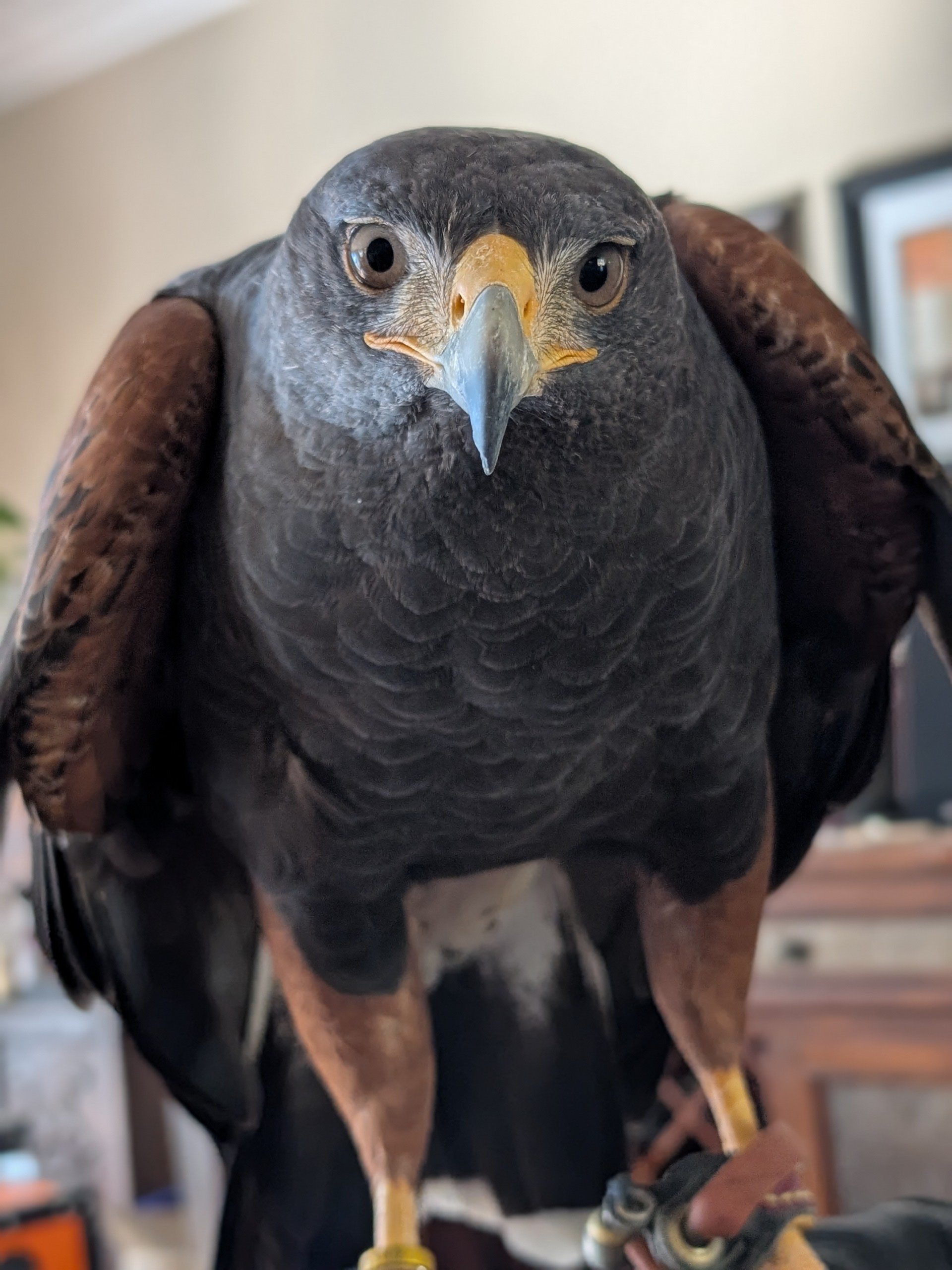
When commercial properties across Texas begin experiencing nuisance bird issues, whether it’s pigeons nesting on structures or grackles forming large nighttime roosts, the most effective solutions are those that create real, lasting behavioral change.
At North Texas Falconry, we utilize trained raptors to disperse nuisance birds in a way that is natural, targeted, and highly effective. Among all raptor species used in modern falconry, Harris’ hawks (Parabuteo unicinctus) stand out as one of the most powerful tools for bird abatement, particularly in urban and commercial environments like Dallas–Fort Worth.
Quick Answer: Why Are Harris’ Hawks So Effective for Bird Control?
Harris’ hawks are ideal for falconry-based bird abatement because they:
Trigger an immediate predator response in nuisance birds
Can work cooperatively to cover large properties
Are highly trainable and controllable in urban environments
Adapt well to commercial settings
Can operate effectively in low-light and nighttime conditions
Provide a natural, eco-friendly solution without chemicals or damage
1. Real Predator Presence That Forces RAPID Dispersal
Static deterrents, like spikes, netting, or sound devices, often fail because nuisance birds quickly adapt to them.
Harris’ hawks are different.
They introduce a real predation threat, which causes:
Immediate flock dispersal
Disruption of roosting and nesting behavior
Long-term abandonment of the property
This is the key difference:
Effective bird control is about changing behavior—not just deterring presence.
2. Unique Ability to Work in Low-Light and Nighttime Conditions
One of the most overlooked, but highly valuable advantages of Harris’ hawks is their ability to operate in low-light and nighttime environments.
This is especially important for properties dealing with:
Grackle roosts forming at dusk
Large overnight bird congregations in parking lots and trees
Facilities that experience peak bird activity after business hours
While many traditional deterrent methods are ineffective at night, and many raptor species are primarily daytime hunters, Harris’ hawks can be utilized during these critical periods to:
Disrupt roost formation as it begins
Prevent birds from settling in for the night
Break up established nighttime populations
This capability makes Harris’ hawks uniquely suited for night roost abatement, one of the most difficult bird control challenges to solve.
3. Cooperative Hunting Behavior = Greater Coverage
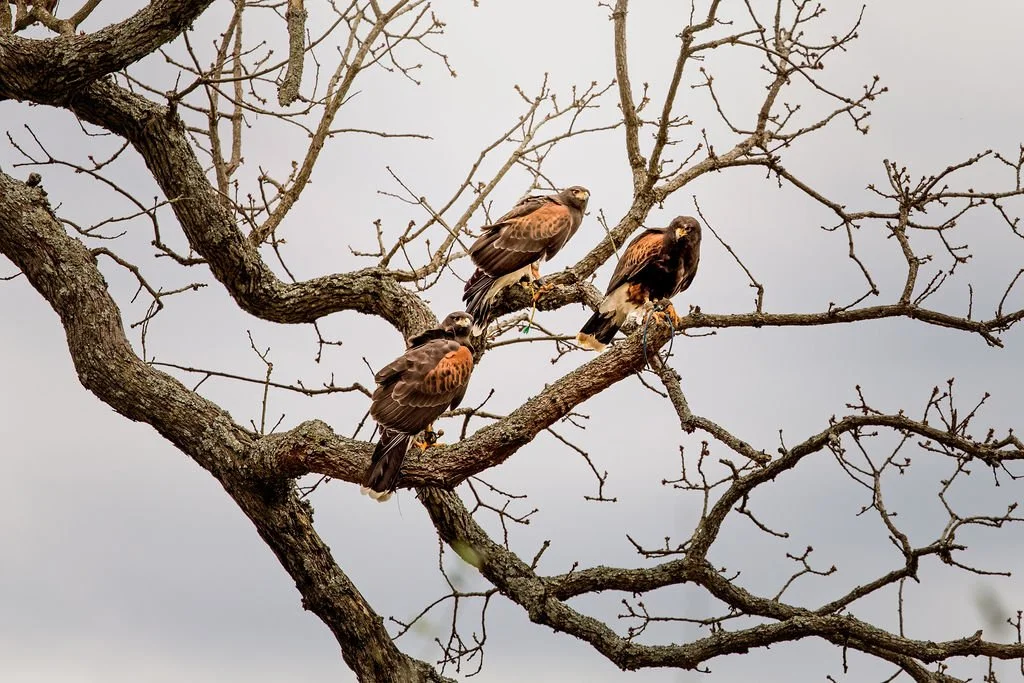
Harris’ hawks are one of the only raptor species that naturally exhibit social, cooperative hunting behavior.
In a falconry-based abatement program, this translates into:
Coverage across multiple areas of a property simultaneously
Sustained pressure on nuisance bird populations
More efficient management of large commercial sites
For shopping centers, warehouses, apartment complexes, and municipal spaces, this means faster and more scalable results.
4. High Trainability and Precision Control
Harris’ hawks are widely regarded as one of the most trainable raptors in falconry.
This allows for:
Reliable recall to the handler
Controlled flight paths around buildings and people
Safe operation in high-traffic environments
For property managers, this is critical.
North Texas Falconry can operate in:
Retail centers
Gas stations
Stadiums and event venues
Multi-family housing communities
…without disrupting normal business operations.
5. Built for Urban and Commercial Environments
Native to the American Southwest, Harris’ hawks are naturally adapted to:
Open landscapes
Sparse tree cover
Heat and variable weather conditions
These traits make them exceptionally effective in:
Parking lots
Rooftops and ledges
Signage and canopy structures
Urban corridors with high bird pressure
Harris’ hawks thrive where nuisance birds thrive.
6. Eco-Friendly and Publicly Acceptable Bird Control
Falconry-based bird abatement using Harris’ hawks provides a sustainable and environmentally responsible solution.
Benefits include:
No poisons or chemicals
No structural damage
Minimal disruption to tenants and customers
Positive public perception
For municipalities, REITs, and commercial property managers, this aligns with modern environmental and ESG priorities.
Why North Texas Falconry Uses Harris’ Hawks
At North Texas Falconry, Harris’ hawks are selected because they consistently deliver results across a wide range of scenarios, from early-stage pigeon activity to large-scale grackle roosts.
Their combination of:
Predator effectiveness
Nighttime capability
Social hunting behavior
Trainability
Urban adaptability
…makes them one of the most effective tools available for long-term nuisance bird control in Texas.
When Should You Address a Bird Problem?
The best time to act is before birds become established.
Early intervention can prevent:
Nesting populations from forming
Escalating cleanup and maintenance costs
Tenant complaints and reputational issues
Long-term structural damage
Once birds establish a roost or nesting site, removal becomes significantly more difficult and costly.
Frequently Asked Questions (FAQ)
Do Harris’ hawks actually remove birds from a property?
They don’t need to eliminate birds to be effective. Their presence typically creates a predator response that causes birds to relocate and avoid the area long-term.
Can this work for nighttime bird problems like grackles?
Yes. Harris’ hawks are particularly effective in low-light and nighttime conditions, allowing disruption of roost formation when it matters most.
Is falconry safe around customers and tenants?
Yes. Harris’ hawks are highly trained and controlled, allowing safe operation in commercial environments.
How quickly can results be seen?
In many cases, immediate reduction in bird activity is observed, with continued improvement over successive visits.
Stop Nuisance Birds Before the Problem Escalates
Bird issues rarely stay the same, they grow.
What starts as a few pigeons or a seasonal grackle presence can quickly turn into:
Large-scale roosts
Health and sanitation concerns
Increased maintenance costs
Tenant dissatisfaction
Request a Site Assessment
If your property is experiencing nuisance bird activity in the Dallas–Fort Worth area or anywhere in Texas, North Texas Falconry can help.
We offer:
On-site assessments
Pilot programs for commercial properties
Scalable solutions for multi-location portfolios
Contact us today to schedule a consultation and see how falconry-based bird abatement can protect your property.
www.NorthTexasFalconry.com
Ryan@NorthTexasFalconry.com
614-403-1004